🐷 Savings Calculator
Project the balance of a savings account or investment with regular deposits and compound interest.
Also known as: Savings Growth · Deposit Calculator · High Yield Savings Account Calculator · Hysa Calculator · Savings Account Calculator · Saving Calculator · Savings Interest Calculator · Interest Calculator Savings
Loading calculator…
How to use the Savings Calculator
- Enter your values in the fields above — the defaults show a worked example.
- The result updates instantly as you type; change any input to compare scenarios.
- Copy or share the result, or open a related calculator below.
How it's calculated
FV = P(1 + i)n + C × ((1 + i)n − 1) ÷ i with monthly i.
Frequently asked questions
Is the Savings Calculator free?
How accurate is the Savings Calculator?
Can I use the Savings Calculator on my phone or offline?
Read more about the Savings Calculator
How savings grow
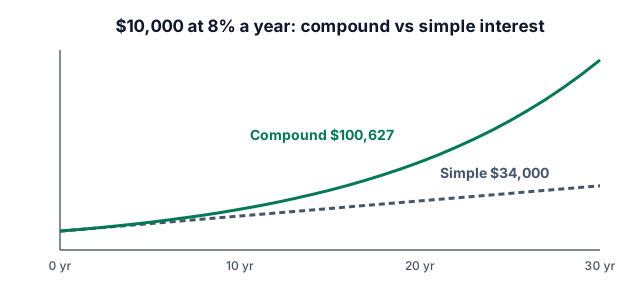
Your balance grows from three sources: the starting deposit, the money you add each month and the interest earned on both. In the early years most growth comes from your deposits; after a decade or more, interest starts to contribute a large share.
Read more
Where to keep savings
For money you may need within a few years, high-yield savings accounts, money market accounts and CDs keep the principal safe (FDIC or NCUA insured up to $250,000 per depositor, per bank). Compare the APY, which already includes compounding. For goals more than five years away, diversified investments have historically grown faster but can fall in value.
Setting a target
Work out the goal first — an emergency fund of 3–6 months of expenses, a down payment, a car — then use the savings goal calculator to find the monthly amount needed. Automating the transfer on payday is the single most effective savings habit.
Taxes and inflation
Interest on savings accounts and CDs is taxable as ordinary income in the US. If inflation is higher than your after-tax interest rate, your savings lose purchasing power even as the balance grows.
When to use the Savings Calculator
Use the Savings Calculator for how your savings grow with an initial deposit, monthly contributions and interest. It is one of 111 free finance calculators, and pairs well with the Savings Goal Calculator, Compound Interest Calculator, EMI Calculator and SIP Calculator.
Tips for accurate results
Use the rate and fees from your actual offer or statement rather than an advertised rate, run a best case and a worst case, and remember that taxes, insurance and fees can change the real cost. Results are estimates, not financial or tax advice.
Sources and review
Sources:
- Consumer Financial Protection Bureau
- Federal Reserve — consumer resources
- SEC Investor.gov — financial tools
Every calculator is checked against published reference values before release and re-reviewed when laws, rates or guidelines change. Read our methodology and editorial policy. Found a problem? Report it — we fix errors quickly.
More Finance Calculators
Popular calculators
Results are estimates for information only and are not financial or tax advice. Calculations run privately in your browser.